It’s Not About Credentials, It’s About Records
Maybe we're focusing on the wrong thing...

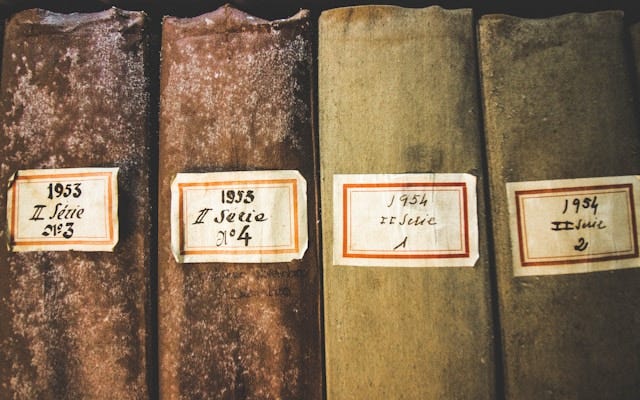
We live in a world obsessed with credentials. Degrees, licenses, certificates, badges—these are the symbols we reach for to prove our worth, our qualifications, our identity. But what if we’ve been looking at the wrong thing? What if the real value doesn’t lie in the credential itself, but in the record that stands behind it?
In digital identity circles, credentials are often presented as the future. Verifiable credentials, zero-knowledge proofs, digital wallets—slick, self-contained, and portable. But while the technology is new, the concept is old: a credential is simply a snapshot, a token of trust issued by an authority. It says, this person passed, this person is certified, this person has permission. But ask yourself—says who? And based on what?
The answer lies in records.
A credential is nothing without the record it references. A diploma without academic transcripts, a license without training logs, a badge without performance history—these are empty shells. Records are the narrative. They are the evidence, the audit trail, the context. Records tell the story that credentials summarize.
In truth, what we trust isn’t the badge—it’s the system of records we assume stands behind it.
Credentials Are Summaries. Records Are Substance.
In a digitized, decentralized world, we should be rethinking how we build trust—not by issuing ever more complex credentials, but by ensuring the underlying records are secure, portable, and verifiable.
A credential can be faked. A record is harder to dispute—especially when it’s cryptographically signed, time-stamped, and linked to a transparent system of governance.
Think about it: when you hire someone, is it the diploma that convinces you—or the experience, references, and demonstrated capability, all of which live in records? When someone claims expertise, you don’t just look for a certificate—you look for a history of action, contribution, and trustworthiness.
We should be building systems that reflect this reality.
From Identity to Integrity
This is where the debate over digital identity becomes especially acute. Too often, the conversation is framed as who you are instead of what you’ve done. But in the real world, credibility flows not from static, revocable tokens, but from a trail of consistent, verifiable action.
In that sense, digital identity should be less about asserting who you are and more about proving what you’ve done—backed by records you control, selectively disclose, and carry with you. A self-sovereign future is one where you own your records, not just your credentials.
And for communities—educational, professional, or social—what matters most is not whether someone holds the “correct” credential, but whether the record supports the claim.
Protocols That Respect the Record
Technologies like Nostr, decentralized data stores, and append-only logs offer a new design space—where records can be made transparent, portable, and tamper-evident. These protocols don’t just issue credentials; they enable a new form of accountability rooted in traceable action.
It’s not about packaging identity into tokens. It’s about preserving the integrity of what happened—so that anyone, anywhere, can judge it for themselves.
This shift is especially important in an era where institutional trust is waning. The idea that we can defer all trust to authorities—issuers, platforms, governments—is increasingly brittle. Instead, trust must emerge from evidence, from provenance, from records. And the best systems are those that make that emergence possible.
Final Thoughts: From Proof to Practice
In the end, credentials are helpful shorthand—but they are not the ground truth. They are the cover page, not the book. What we need are systems that honor the full story—records that are portable, persistent, and provable.
So the next time you think about trust in the digital age, don’t ask, What credential do they hold? Ask instead, What’s the record?
Because it’s not about credentials.
It’s about records.
+100
I would also suggest that having multiple copies of records and linked record history happen in multiple locations (and technologies) and keeping periodic snapshots offline with credible equivalent of a safety deposit box.
One recent discussion with a colleague on the lifetime of a digital identifier (DID) also raised the lifetime of the identifier support records, or certificate issuers and their ecosystem(s).
What's is your work history worth is one or more of your past employers no longer exist and their record/certificate support infrastructure is no longer online?
Hello Tim. To play devil's advocate a bit? Are records not a form of more detailed credentials? Or perhaps you are arguing for records that are not signed by an authority but can instead can be trustlessly verified by the relying party as valid? (by using things like zkp, confidential computing and other similar ones).